
Том 3 № 8 (2020): Научно-образовательный журнал преподавателей и студентов «StudNet»
УДК-61
Mitkovskaya Oksana Anatolyevna, Professor, doctor of medical Sciences, head of the, Department of Allergology and immunology, Alma-Ata State Institute of Advanced Medical Education, Almaty, Kazakhstan
Митковская Оксана Анатольевна, mitkovskaya@mail.ru
Abstract
This paper presents an overview of the findings in research focusing on the effectiveness of assessing the severity of clinical manifestations of pollinosis, the effectiveness of symptomatic therapy of pollinosis on the background of a concomitant chronic inflammatory disease. The study was conducted in the period from 2005-2010. The article draws on data from clinical trials in the city of Almaty. In Kazakhstan, the development of pollinosis is most often associated with sensitization to pollen of weed grasses (wormwood, quinoa, hemp), less often with hypersensitivity to meadow grasses (fescue, hedgehog, timothy grass, bluegrass), rarely sensitive to pollen of trees (birch, elm-tree). It has been established that the peaks of the content of pollen of plants in the air coincide with the periods of growth of exacerbation of the disease in this region
Анотация
В данной статье представлен обзор результатов исследований, посвященных правильности оценки тяжести клинических проявлений поллиноза. Оценена эффективности симптоматической терапии поллиноза на фоне сопутствующего инфекционного воспалительного заболевания. Исследование проводилось в период с 2005 по 2010 год. В статье использованы данные клинических исследований, проведенных в г. Алматы. В Казахстане развитие поллиноза чаще всего связано с сенсибилизацией к пыльце сорных трав (полынь, лебеда, конопля), реже-с гиперчувствительностью к Луговым травам (овсяница, ежик, Тимофеевка, мятлик), реже-с чувствительностью к пыльце деревьев (береза, вяз). Установлено, что пики содержания пыльцы растений в воздухе совпадают с периодами нарастания обострения заболевания в этом регионе
Keywords: bacterial infection, hepatitis, pollinosis, allergic reactions, tuberculosis, immune system, antagonism, synergism.
Ключевые слова: бактериальная инфекция, гепатит, поллиноз, аллергические реакции, туберкулез, иммунная система, антагонизм, синергизм.
- Introduction
In Kazakhstan, the development of pollinosis is most often associated with sensitization to pollen of weed grasses (wormwood, quinoa, hemp), less often with hypersensitivity to meadow grasses (fescue, hedgehog, timothy grass, bluegrass), rarely sensitive to pollen of trees (birch, elm-tree) (1-3). It has been established that the peaks of the content of pollen of plants in the air coincide with the periods of growth of exacerbation of the disease in this region (4, 5).
Pollinosis is a classic chronic allergic disease caused by pollen of plants, which is manifested by allergic inflammation of the mucous membranes of the respiratory tract and other tissues and is accompanied by symptoms of seasonal rhinitis, conjunctivitis, bronchial seasonal asthma, atopic dermatitis (6 — 9). In the medical literature, different names of pollinosis can be found: hay fever, spring catarrh, seasonal rhinitis and conjunctivitis, pollen asthma and others.
Physicians of many specialties face with pollinosis: allergists, otorhinolaryngologists, ophthalmologists, therapists, dermatologists, infectiologists, etc. So far, this disease is often misdiagnosed as: influenza, acute respiratory infections (10-12). Consequently, patients are permanently and unsuccessfully treated with symptomatic agents, antibiotics (13, 14). The purpose of this study was to examine the features of the course of pollinosis on the background of chronic inflammatory diseases.
- Materials and methods
The aim of our study was to compare the allergic disease in different groups. The clinic of the course of pollinosis in various groups was presented as follows: 1 group — pollinosis (30 people), 2 group — pollinosis + tuberculosis (30 people), 3rd group — pollinosis + chronic viral hepatitis B (CVHB) (30 people). The main indicators of the clinic were the frequency of exacerbations during the pollen season — the duration of the exacerbation season, the effectiveness of combination therapy: zetril + nazonex, IL-5; IL-4 IgE common in different groups.
- Results and discussions
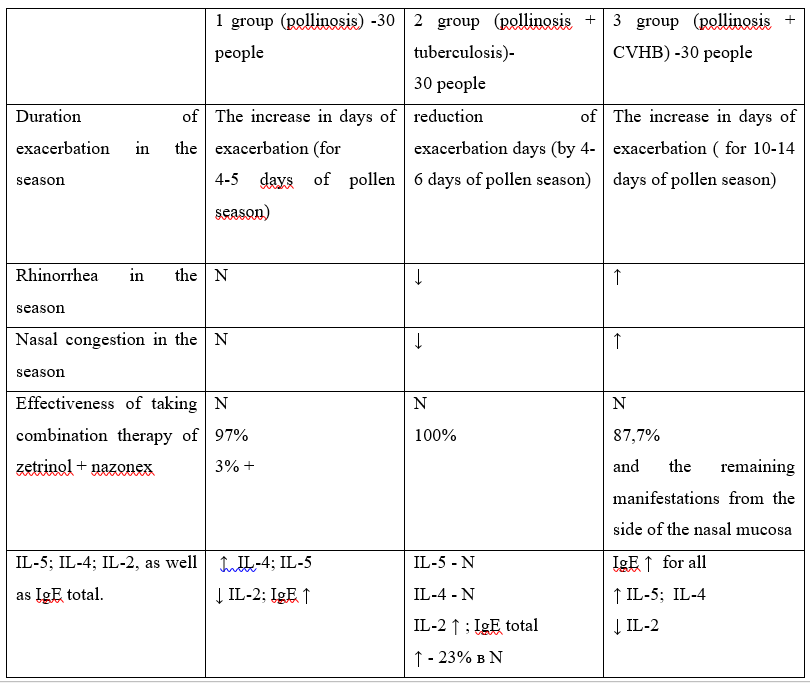
Table 1 presents the clinical course of pollinosis in various groups: 1 group (pollinosis) — 30 people, 2 group (pollinosis + tuberculosis) -30 people, 3 group (pollinosis + CVHB) -30 people.
The main indicators in this table are defined by the nature of the clinical course of pollinosis: the duration of of exacerbation in the season, rhinorrhea in the season, nasal congestion in the season, the effectiveness of taking combination therapy of zetrinol + nazonex, the content of IL-5; IL-4; IL-2, as well as IgE total.
Table 1. — Severity of the course and effectiveness of treatment of pollinosis in various groups of patients
Diagrams (Fig. 1, 2, 3) represent the clinic of the course of pollinosis in patients of different groups.
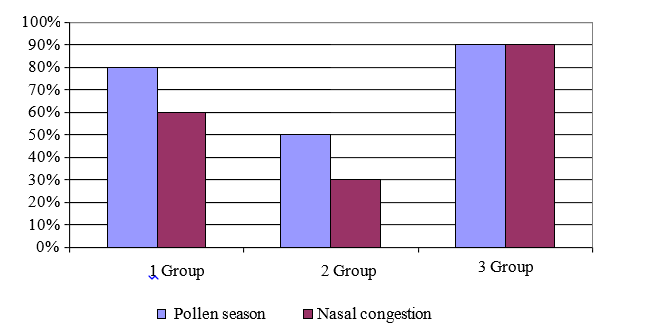
Figure 1. Indicators of rhinorrhea in individual groups.
During the pollen season, the manifestations of rhinorrhea prevail in the 3rd group (pollinosis + HBVB) and its minimal expression in the group with pollinosis, and most smaller index in the second group (pollinosis + TB)
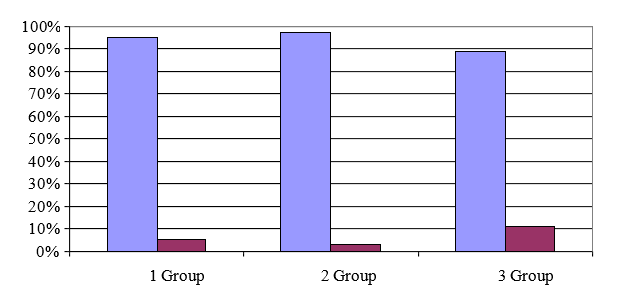
Figure 2. Indicators of the effectiveness of combination therapy in individual groups.
The Figure 2 shows that the highest results on the effectiveness of combination therapy were observed in group 2 (pollinosis + tuberculosis), lower in group 1 (pollinosis), and the lowest results in group 3 (pollinosis + CVHB).
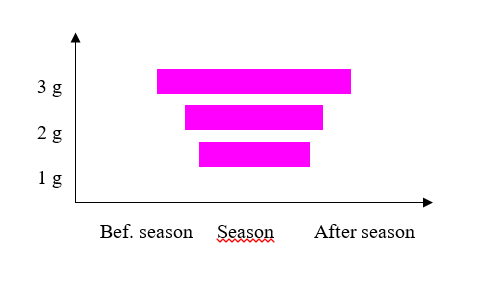
Figure 3. Indicators of the course of pollinosis in individual groups.
Figure 3 also shows the clinical course of pollinosis in various groups: 1 group (pollinosis) — 30 people, 2 group — (pollinosis + tuberculosis) -30 people, 3rd group- (pollinosis + CVHB) -30 people.
The main indicators of clinical course of pollinosis were the duration of exacerbation in the pollen season, rhinorrhea in the season, nasal congestion in the season, the effectiveness of taking combination therapy of zetrinol + nazonex, the content of IL-5; IL-4; IL-2, as well as IgE total.
- Conclusion
Thus, when assessing the results, the following conclusion can be drawn: pollinosis on the of chronic hepatitis is most active and more difficult to give in symptomatic therapy; when combination of pollinosis with tuberculosis, clinical manifestations are less pronounced and the time of exacerbation of pollinosis decreases.
Conclusions:
1. According to the survey, the effect of the transferred hepatitis leads to the onset of an allergic disease.
2. Clinical manifestations of pollinosis on the background of tuberculosis infection are less active and in terms of interleukin- 4,5 are more reduced, as well as indicators of total IgE.
3. Clinical manifestations of pollinosis on the background of CVHB are more active and in terms of interleukins- 4,5 are close to the indicators of an allergic disease and sometimes even higher, as well as indicators of total IgE.
4. The season of exacerbation of pollinosis is longer in terms of the time and strength of the manifestation of symptoms on the background of the transferred hepatitis than in the case of pollinosis without concomitant infectious disease.
5. The season of exacerbation of pollinosis is less in terms of time and strength of manifestation of symptoms on the background of tuberculosis infection than in pollinosis without concomitant infectious disease.
References
- A.D. Ado, «General Allergology» (manual for doctors). The second edition, revised and supplemented. Publisher: Moscow «Medicine», p-468, 1978.
- O.A. Alekseev, A.A. Suldavtsev, «Immune mechanisms in the pathogenesis of hemorrhagic fever.» Ter. archive (70) II: 39-42, 1998.
- N.D. Beklemishev,»T-helper 2 is the key cell of prometazoid immunity and immediate-type allergy response.» Immunology 3: 4-8, 1995.
- T.N. Elkina, E.V. Panarina, E.A. Surovikova et al. Allergic rhinitis in children: epidemiology and modern therapy / / Pediatrics at the turn of the XXI century: Scientific works of Novosibirsk med. academy. 1999, -T.148.-C.74-78
- L.V. Luss, Allergic rhinitis: problems, diagnostics, therapy // The attending physician .- 2002. №4.-С.24-30
- B.C. Moshkevich, Pollinosis. Almaty, 2004, -132c.
- I.M. Sheveljuk, The prevalence of pollinosis in school-age children in St. Petersburg: the results of an epidemiological study // Allergology .- 2001, N2.- P.44-46
- Bjorksten Т.М. and Sepp E. «Allergy development and intestinal microflora». J. Allerqy Clin. Immunol. 108 : 516 — 520, 2001.
- Bloch P. and Simonen P. «Antibody responses in relation to infectio status». Аm. I. Trop. Med. Hyd. 59 : 978 — 984, 1998.
- Bodner C. and Godden D. «Family size, childhood infectin and atopic diseases». Thorax 53 : 28 — 32, 1998.
- Bousquet J, P. van Cauwenberg, N. Khaltaev et al Allergic rhinitis and its impact on asthma (ARIA) — Pocket Guide.-WHO.2001.-P.23
- Brobac K. L. and Breborowicz S. «Atopic sensitization and respiratory symptoms». Clin. Exp. Allergy 59 : 826 — 835, 1994.
- Filipowicz E. «The role of respiratory virus infections in exacerbations of asthma». XXII Congress of EAACI, Abstract book: 65, 2003.
- I.S. Gushchin, Prospects for improving the antiallergic effect of H1-antihistamines. Attending physician, 2009,5,1-4.
Литература
- [1] А. Д. Адо, «общая Аллергология» (пособие для врачей). Второе издание, переработанное и дополненное. Издательство: Москва «медицина», С. 468, 1978.
- [2] О. А. Алексеев, А. А. Сулдавцев, «иммунные механизмы в патогенезе геморрагической лихорадки.- Тер. архив (70) II: 39-42, 1998.
- [3] н.д. Беклемишев,»Т-Хелпер 2 является ключевой клеткой прометазоидного иммунитета и аллергического ответа немедленного типа.»Иммунология 3: 4-8, 1995.
- [4]Т. Н. Елькина, Е. В. Панарина, Е. А. Суровикова и др. Аллергический ринит у детей: Эпидемиология и современная терапия / / педиатрия на рубеже XXI века: научные труды Новосибирского мед.ун-та. академия. 1999, — т. 148.- С. 74-78
- [5] Лусс Л. В. аллергический ринит: проблемы, диагностика, терапия // лечащий врач .- 2002. №4.-С.24-30
- [6] Б. С. Мошкевич, поллиноз. Алматы, 2004, -132С.
- [7] Шевелюк И. М. Распространенность поллиноза у детей школьного возраста в Санкт-Петербурге: результаты эпидемиологического исследования // Аллергология .- 2001, N2.- С. 44-46
- [8] Бьоркстен Т.М. и Зепп е. «развитие аллергии и кишечной микрофлоры». Джей Аллерки Клин. Иммунол. 108 : 516 — 520, 2001.
- [9] блох п. и Симонен П. «реакция антител в отношении инфекционного статуса». Am. И. Троп. Медицинский. Гидравлический. 59 : 978 — 984, 1998.
- [10] Боднер с. и Годден Д. «размер семьи, детский инфектин и атопические заболевания». Грудная клетка 53: 28-32, 1998.
- [11] Bousquet J, P. van Cauwenberg, N. Khaltaev et al аллергический ринит и его влияние на астму (Ария) — Карманный справочник.-КТО.2001.- С. 23
- [12] Бробак К. Л. и Бреборович С. «атопическая сенсибилизация и респираторные симптомы». Клин. Опыт. Аллергия 59 : 826-835, 1994.
- [13] Филипович Е. «роль респираторных вирусных инфекций в обострениях бронхиальной астмы». XXII съезд EAACI, абстрактная книга: 65, 2003.
- [14] И. С. Гущин, перспективы улучшения противоаллергического действия Н1-антигистаминных препаратов. Лечащий врач, 2009,5,1-4.