
Том 3 № 9 (2020): Научно-образовательный журнал преподавателей и студентов «StudNet»
УДК 621.8
Pegin Danil
Baccalaureate
Florida Poly
USA, Lakeland
Annotation
The aim of this article is to introduce the reader to the basics of processing, microstructure and properties of fasteners of the company «ARP», which are used in automobile engines, including those installed in cars participating in races. It shows graphically and explains all the stages that the future product goes through, starting with the coil wire and ending with the finished product. The resulting fastener is similar in structure to carbon and low-alloy steels. ThematerialreviewedisISO8740 ChromeMolyalloy.
Keywords:ISO 8740, ARP Company, Bolts, fasteners, manufacturing
Introduction
Fasteners are essential part of any complex structure. Furniture, heavy machinery, rockets, ships, buildings and even bridges, none of this would not be possible if fasteners did not exist. Bolts and nuts hold most of the things we use together, especially the ones that need to come apart eventually for maintenance or other reasons.
While fasteners have nearly infinite number of applications, they are not all created equal. There are different grades of fasteners in the industry, with most common ones being 18-8 stainless fasteners, that have quite low yield strength of 20,000 psi (mostly used in common applications, like holding together furniture) and grade 8, with minimum yield strength of 130,000 psi[1](holds together parts in your car). And therefore, it is crucial to use a relative to your application fastener, otherwise it will be a subject to undergo excessive amounts of stress, which may result in a catastrophic failure.
In automotive industry, fasteners play vital role as well. They are used in almost every part of the car, from interior pieces up to the internal parts of the engine. And while interior and exterior parts of the vehicle do not require anything above grade 8 fasteners, internal parts of the engine do. In this paper, we will concentrate on one vital fastener without which the internal combustion engine will not be able to work at all. The name of the fastener is the head stud/bolt (type depends on the automotive maker and engine design). Figure 1[2]shows the placement of the fastener inside the engine.
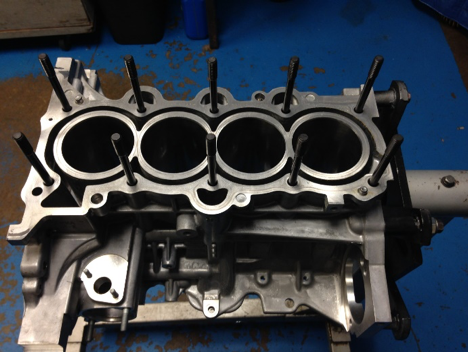
Figure1. Head studs are located on the top of the engine block, with purpose of holding head down to the block
However, automotive industry companies, like any other, is interested in cost efficient solutions. Because of that, most times instead of the head studs, head bolts are used. Due to the materials used and stress distribution of head bolt vs. head stud, bolts are subject to being one time use fastener due to being stressed beyond their yield strength when torqued down to the block. Quite often it can be noticed that they stretch out. Because of that, once removed, they can no longer be used (Figure 2)[3].
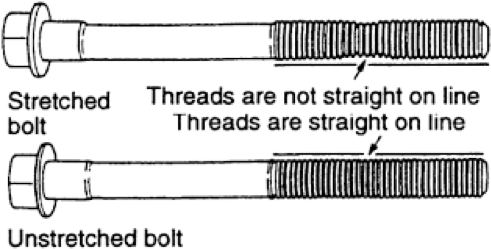
Figure2. Used head bolt vs. New head bolt.
This is just unacceptable in some applications, especially when it comes to racing. Race cars need to come apart quite frequently for all around maintenance, and most of the time OEM head bolts are not providing enough clamping force to hold the high output engines together. This is when aftermarket solutions come in handy. Automotive Racing Products (ARP) is one of the pioneers in production of the fasteners for racing applications. Their solutions are used by numerous teams in different leagues around the world.
Discussion
It may not seem like it, but fasteners are coming through a lot of steps to become what they are. ARP head bolts are made from 8740 Chrome Moly alloy and start their way as spools of wire. Only SDF (seamless and defect free) and CHQ (cold head quality) material is used in the production of this fastener[4]. As the first part of the material processing, wire of appropriate length undergoes the process of cold heading – a process of progressively forming a specified shape from metal wire without adding heat using a replicated series of dies, hammers, and punches at high speed. This process requires the wire to go through 4 stages of cold heading (Figure 3) [5], where different tooling is used to shape the head of the bolt. In our case of the head stud, the nut for a stud is going through the same process.
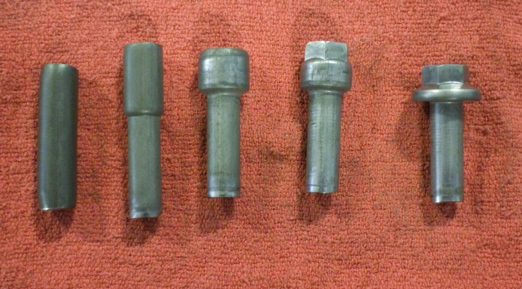
Figure 3. 4 stages of cold heading — from a piece pf wire to the head of the bolt
After material was cold headed, it is being sent through a washer in order to remove any oils and lubricants that may have appeared during the process. After that, it is sent to the heat-treat facility in order to improve hardness of the material. In order to heat treat the studs, they are being sent into the internal quench furnace, where parts are heated in a 100-percent nitrogen atmosphere. Why nitrogen? This is because heat treatment in nitrogen atmosphere (Nitriding) increases both corrosion resistance and hardness of material and serves as protective atmosphere to protect from contamination [6] (Figure 4). Once material reached had been treated for required time, parts are oil quenched inside the furnace in order to lock in gained properties.
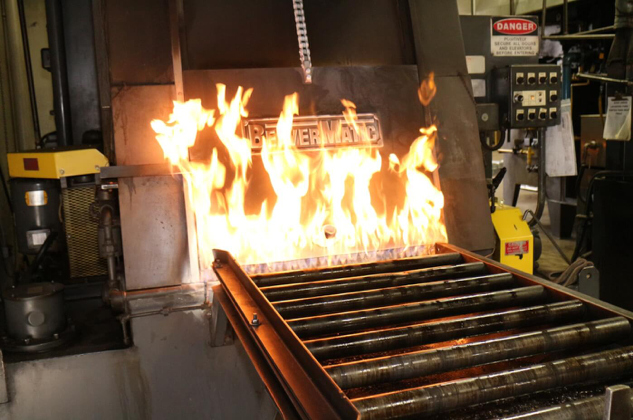
Figure 4. Furnace used for heat treating of the studs. The Flame at the door prevents outside air from contaminating the nitrogen atmosphere when the door is opened.
After first stage of heat treatment, parts are washed again. Next step is tempering, which will lower the hardness of the steel recrystallizing material from cold work and hardening. When studs come out, their ductility is greatly improved, which is great for the application they will be used in. No one wants brittle studs to break off due to the stress, leading to a catastrophic engine failure.
Next step in production is shot-peening – a process used to produce a compressive residual stress layer and modify the mechanical properties of metal. It is done by striking material with shot (round metallic, glass, or ceramic particles) with force enough to create plastic deformation. This is another stage of cold working the surface of the material and removing stress from previous stages of production. After cold working the stud, it is being sent through the dies in order to make it perfectly straight. Dies are ridged, one is stationary and other one reciprocates to force the part to roll between the dies. After that, threads are rolled on the stud. No material is removed during that process and is done in room temperature (Cold-worked) (figure 5). After that studs are completed and is off to inspection. Figure 6 is summarizing all the steps used in the production of the ARP head stud
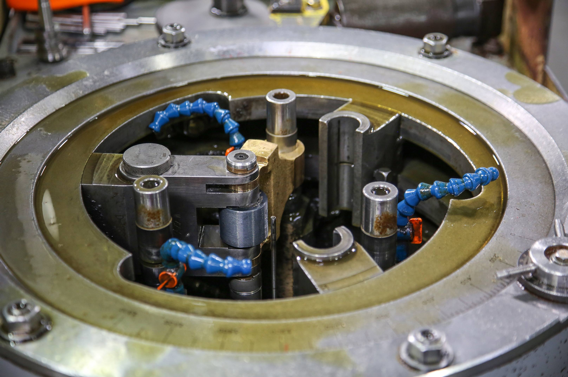
Figure 5. Reed thread-rolling machines. It is used to roll the threads on the bolts and studs without removing any material.
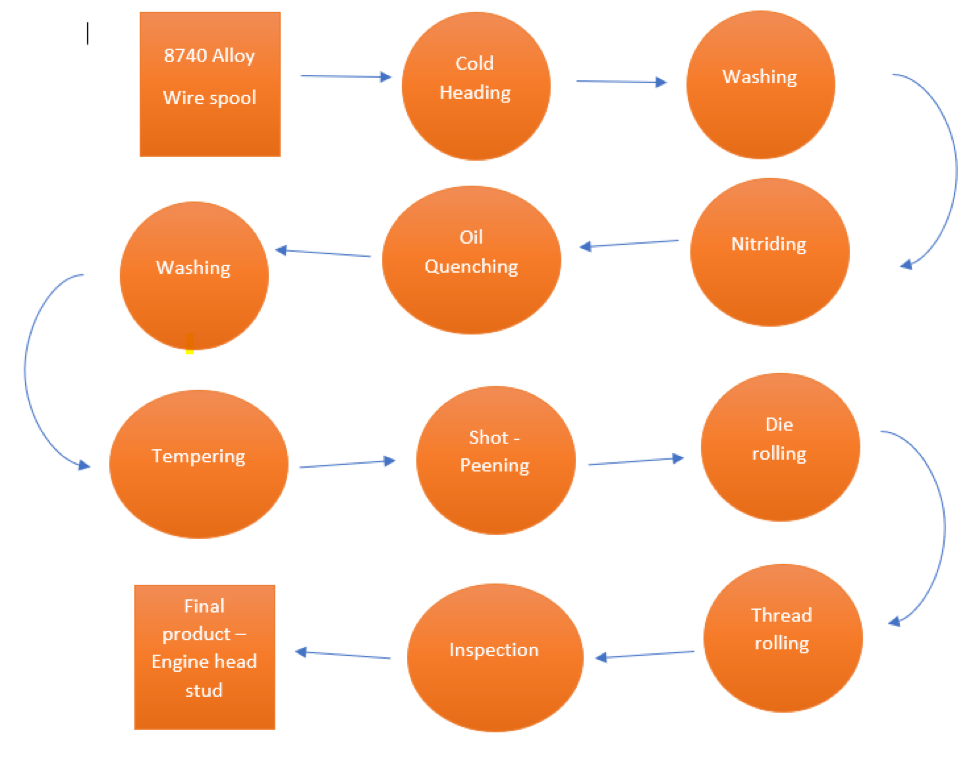
Figure6. Processing of the ARP head stud
Now, once the insight on production of the head studs was provided, many may wonder: Why head studs are produced to be so stress resistant? Why regular grade 8 stud will not be able to suit the application? Well, there are few crucial reasons for that. First and the main one is to prevent phenomenon called engine head lift. It occurs when the internal pressure inside the cylinders rises so high that forces acting on the head of the engine are causing the head and the head bolts/studs to warp. If fasteners go past their yield strength or they are not fatigue resistant, that will lead to failure of the head gasket, which in easy terms is just a major failure of the engine which prevents it from functioning completely. Figure 7 shows how head lift looks like.
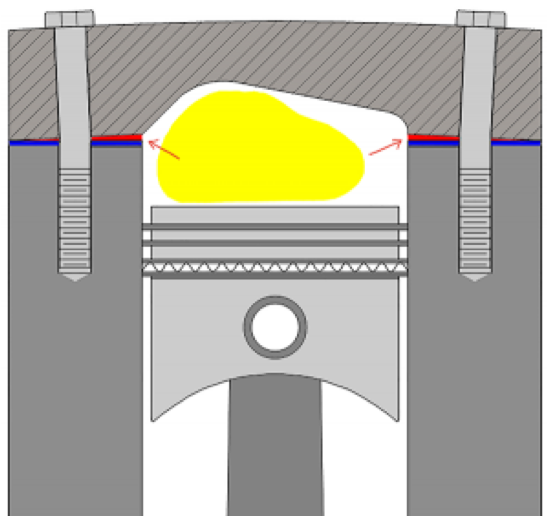
Figure 7 Cylinder head lift
In order to prevent this phenomenon ARP head studs go through the processes of nitriding and tempering in order to achieve necessary fatigue resistance and tensile strength. These fasteners are designed with the aim to provide the most durable and strong solution for this application. And since the material used is processed 8740 chrome moly alloy, with the existing manufacturing process, the tensile strength of the material that these fasteners are made from is 180,000 psi.
However, not every 8740-alloy material will be capable to provide such characteristics. Material used goes through strict selection process in order to find the highest-grade metals to be used in production. In order to provide necessary fatigue resistance and toughness, fine grain size is required. ARP studs are produced using ASTM 8 fine grain material (grain size is 0.022mm) [7]. 8740 Chrome-moly alloy has a Martensitic body centered tetragonal form (Figure 8) with high concentration of carbon. This structure allows material to be hardened and tempered similarly to carbon and low alloy steels. And as it was stated above, nitriding and tempering are necessary stages of production of the final product. Without those processes, it
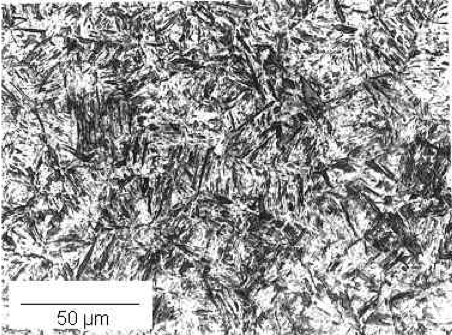
Figure 8 Photomicrograph of Martensite Structure
would have been impossible to reach the tensile strength of 180,000 psi.
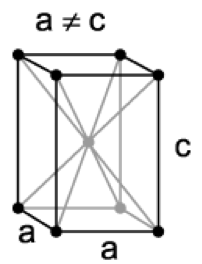
Figure 9 Body Centered Tetragonal Unit Cell
Summary
When it comes to production of the high-grade product, everything plays important role. With engine head stud being a vital component of the mechanism, it is important to make sure that it will not fail. Combustion process expresses great stress on the components of the engine; therefore, it is essential to use fatigue resistant high strength components. However, By their definition none of the components can be brittle, otherwise any occurrence of unexpected load occurring, whole mechanism will suffer a mechanical failure due to block being cracked, head being separated off the engine due to head bolt failure and etc. This dictates a necessity to keep balance between material toughness and elasticity.
Special properties of ARP head studs would not be achieved if the material did not have particular microstructure. Because of that 8740 chrome-moly alloy used is in martensitic form and its grain size is very fine. If not that, Nitriding and tempering of the material would not be so effective and would not give needed fatigue resistance and tensile strength of 180,000 psi, which far exceeds the stress numbers fasteners will ever see during its application in internal combustion engines. And yet even the highest-grade material would not be much of use if the processing of it is not systemized. During the process of manufacturing, head studs go through three stages of cold working and two stages of heat treatment in order to achieve desired properties. If any of the stages would have been missing, head studs would come out too brittle or not strong enough to sustain the engine loads, leading to the complete failure of the mechanism.
With above said, “processing-microstructure-property”, is essential in order to make sure that the final product is going to be able to sustain all the requirements for its application. Therefore, every step in production, from selection of raw material up to the temperature used in heat treatment processes is important and will affect the properties of the final product. And in order to receive desired results, material science and engineering is essential.
Literature
[1] Boltdepot.com. n.d. Bolt Depot — Bolt Grade Markings And Strength Chart. [online] Available at: <https://www.boltdepot.com/fastener-information/materials-and-grades/bolt-grade-chart.aspx> [Accessed 16 April 2020].
[2] 845motorsports.com. n.d. Gamma ARP Head Stud Kit | 845 Motorsports. [online] Available at: <https://www.845motorsports.com/shop/hyundai/elantrasport/engine-transmission-elantrasport/gamma-arp-head-stud-kit/> [Accessed 16 April 2020].
[3] n.d. AutoZone Repair Guide. [online] Available at: <https://www.autozone.com/repairguides/Mitsubishi-Eclipse-1990-1998-Repair-Guide/ENGINE-MECHANICAL/Cylinder-Head/_/P-0900c152800ad667> [Accessed 16 April 2020].
[4] Arp-bolts.com. n.d. The Official ARP Web Site | Technical Information. [online] Available at: <https://arp-bolts.com/p/technical.php> [Accessed 16 April 2020].
[5] Riddle, T. and Tobin, C., 2020. Super Nuts And Bolts: A Look Inside ARP Bolts And What Makes Them Better. [online] Diesel World. Available at: <https://www.dieselworldmag.com/diesel-technology/super-nuts-and-bolts-a-look-inside-arp-bolts-and-what-makes-them-better/> [Accessed 16 April 2020].
[6] L&L Special Furnace Co, Inc. n.d. Heat Treatment Furnace Atmospheres: Inert Gas And Hydrogen — L&L Special Furnace Co, Inc.. [online] Available at: <https://llfurnace.com/blog/heat-treatment-furnace-atmospheres-inert-gas-and-hydrogen/> [Accessed 16 April 2020].
[7] Sherman, R., 2017. [online] Dsportmag.com. Available at: <https://dsportmag.com/wp-content/uploads/2017/02/ARP-Catalog.compressed.pdf> [Accessed 20 April 2020].